
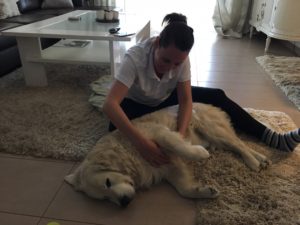
Canine massage for Arthritis
Arthritis in Dogs: 5 Ways to Help Manage Their Condition
Arthritis in dogs is very common, particularly as they get older. It can cause stiffness, discomfort and changes in the way a dog moves, but there are lots of practical things owners can do to make everyday life easier.
If your dog has been diagnosed with arthritis, management usually works best when several things are combined. Veterinary care is important, but small changes at home can make a real difference too.
1. Put rugs down on slippery floors
Many homes in Spain have tiled or polished floors, which can be difficult for dogs with arthritis.
Dogs walk on their toes rather than placing the whole foot flat like we do, so they can struggle to get good traction on slippery surfaces. If their joints are already sore or unstable, constantly slipping can make movement more difficult and may cause them to tense their muscles to try to stay balanced.
Putting rugs or non-slip runners along the routes your dog uses most often can make walking around the house much easier and safer.
Focus on areas such as hallways, around food and water bowls, next to beds and anywhere they need to turn or get up from the floor.
2. Speak to your vet about joint supplements
Some dogs with arthritis may benefit from joint supplements, but not all products are equal.
Ingredients commonly found in joint supplements include glucosamine, chondroitin and MSM. However, the evidence and quality can vary between products.
It is worth speaking to your vet about whether a supplement is appropriate for your dog and which brands or formulations they recommend.
3. Provide supportive bedding
A comfortable, supportive bed can make a big difference for an arthritic dog.
Dogs with stiff or painful joints may benefit from a bed that gives them enough room to change position and stretch out comfortably.
Orthopaedic or supportive foam beds can help distribute body weight more evenly and provide cushioning for sore joints.
Also think about where the bed is positioned. Try to place it somewhere warm, easy to access and away from slippery flooring if possible.
4. Keep your dog at a healthy weight
Maintaining a healthy weight is one of the most important things you can do for a dog with arthritis.
Extra weight increases the load placed on already uncomfortable joints and can make movement more difficult.
Even a relatively small amount of excess weight can make a difference over time, so if you are unsure what your dog’s ideal weight should be, speak to your vet.
5. Consider regular canine massage
Arthritis does not only affect the joint itself.
When a dog is uncomfortable, they often change the way they move. They may shift weight away from one limb, shorten their stride or rely more heavily on other areas of the body.
Over time, this can lead to muscular tension and overcompensation.
This is where canine massage can be useful.
Massage cannot cure arthritis or reverse changes within the joint, but it can help address some of the muscular tension and compensatory patterns that develop around the condition.
When I work with an arthritic dog, I do not simply focus on the painful joint. I look at the whole dog, including posture, movement, muscle tension and how the body is adapting.
Supporting those overworked areas can help some dogs move more comfortably and maintain better mobility alongside appropriate veterinary care.
If you would like to find out whether canine massage could support your dog, you can contact K9 Bodywork on 608 803 897.