
Canine Musculoskeletal Health
Canine Massage and the Importance of Good Flooring
We often think about exercise, weight and nutrition when considering canine musculoskeletal health. However, something as simple as the flooring in your home can also affect how your dog moves.
Slippery floors make it harder for dogs to maintain good traction. As a result, they may alter their posture and movement to feel more stable.
Over time, repeatedly trying to stabilise on a slippery surface can place additional demands on the muscles of the body. Dogs may become more cautious in the way they move, particularly if they’re already uncomfortable.
Fortunately, something as simple as adding rugs or non-slip runners can make a big difference.
How Slippery Floors Affect Movement
Watch a dog walking confidently outside and then compare that with the same dog crossing a slippery tiled floor.
You may see their posture change immediately.
They might shorten their stride, spread their feet or move more cautiously. Some dogs also shift their weight as they try to find stability.
The muscles then have to work differently to help control that movement.
Occasionally walking across a slippery surface isn’t necessarily a problem for a healthy dog. However, regularly struggling for traction can place unnecessary demands on the body.
Why Traction Matters for Puppies
Good footing is particularly important while puppies are growing and developing.
Puppies are still developing their strength, coordination and movement patterns. Constantly slipping and scrambling for grip isn’t ideal for a developing musculoskeletal system.
Genetics play a major role in developmental orthopaedic conditions such as hip dysplasia. Other factors can influence joint development too.
Therefore, we shouldn’t suggest that slippery floors alone cause hip dysplasia. However, providing secure footing gives a growing puppy a more stable surface on which to move, play and develop.
Slippery Floors and Dogs With Orthopaedic Conditions
Traction becomes even more important for dogs who already have an injury or orthopaedic condition.
A dog with hip dysplasia, arthritis or another painful condition may already change how they use their body.
Now imagine asking that dog to walk across a floor where their feet repeatedly slide.
They have to work harder to maintain stability. They may also become hesitant or worried about moving across the surface.
For some dogs, even getting up from the floor can become difficult when their feet can’t find enough grip.
This can affect much more than walking around the house. A dog may become reluctant to get up for food, move between rooms or reach the door for a walk.
A Simple Change That Can Help
You don’t necessarily need to replace your flooring.
Strategically placed rugs, runners and non-slip mats can give your dog secure pathways around the home.
Think particularly about areas where your dog:
- gets up after resting
- turns corners
- walks through frequently
- approaches stairs or steps
- gets on or off furniture
- eats and drinks
For older dogs or those with mobility problems, these small environmental changes can make everyday movement easier and more confident.
Looking at the Whole Dog
Canine musculoskeletal health isn’t only about individual muscles and joints.
The environment matters too.
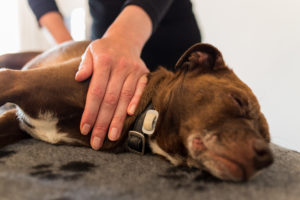
When I work with a dog, I’m interested in what happens outside the massage session as well as what I feel beneath my hands. Flooring, exercise, daily activities and how a dog moves around their home can all provide useful information.
Massage can help us address areas of muscular tension. However, if a dog spends the rest of the week struggling for grip at home, we’re missing an important part of the picture.
Sometimes supporting a dog’s body starts with something as simple as putting down a rug.