If you’ve been thinking about booking a dog massage here on the Costa del Sol, you might be wondering what it actually involves. What happens during a session? Where does it take place? And how do you know if it’s right for your dog?
These are great questions — and in this post, we’re going to answer all of them. Whether your dog is dealing with stiffness, recovering from an injury, or you simply want to support their health and wellbeing, here’s exactly what to expect.
It Comes to You
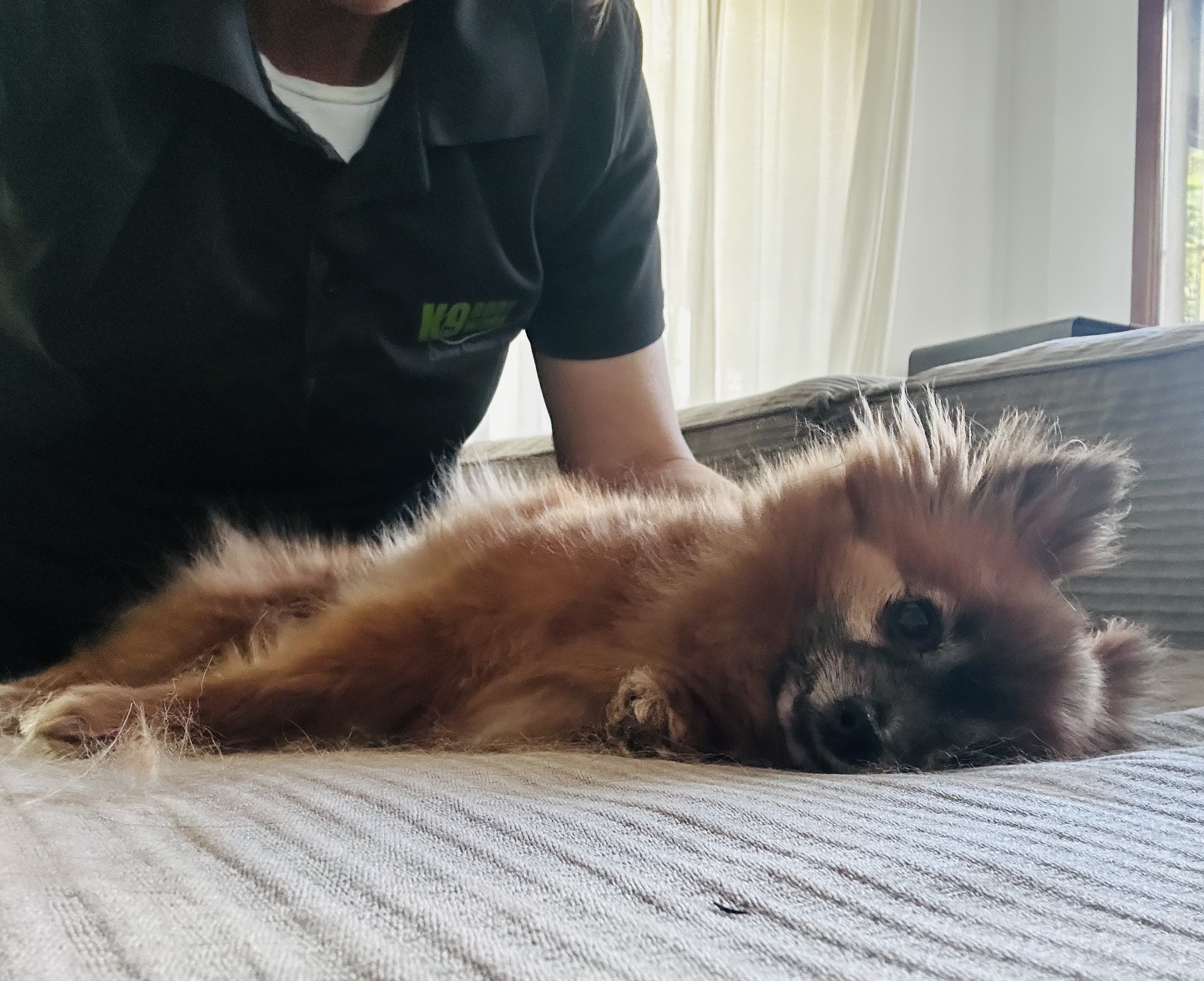
One of the things that makes dog massage on the Costa del Sol with K9 BodyWork different is that we come to you. There’s no stressful car journey, no waiting room, and no unfamiliar clinic smells.
Your dog gets their treatment at home, in their own space. For most dogs, this makes a huge difference. They’re relaxed from the start. They can move freely, take a break if they need to, and return to their bed afterwards without any fuss.
It’s also much easier for you as an owner. No scheduling around travel time, no sitting in a waiting room. We arrive, we work, and your dog feels better — all without you having to leave the house.
Before We Begin — The Assessment
Every session starts with a thorough assessment. Before any hands-on work begins, we take time to understand your dog’s history. We want to know about any previous injuries, current health conditions, and what’s been concerning you lately.
Then we watch your dog move. We look at how they walk, where they carry their weight, and whether there’s any unevenness in their stride. We also observe their posture at rest — the way a dog stands still tells us a lot.
This assessment shapes everything that follows. No two dogs are the same, and no two sessions are identical. The hands-on work always reflects what we find.
What Happens During the Treatment?
Once the assessment is complete, the hands-on work begins. We use a range of soft tissue techniques, adapted to your dog’s specific needs.
Depending on what the assessment reveals, a session might include:
- Effleurage — long, flowing strokes to warm the tissues and encourage circulation
- Petrissage — gentle kneading to work deeper into the muscle
- Trigger point release — targeted pressure to address specific knots or tight spots
- Myofascial techniques — slow, sustained work on the connective tissue
- Passive range of motion — gentle, guided movements to assess and support joint mobility
Throughout the session, we watch your dog’s responses closely. Their body language guides everything. If they need a break, we pause. If they’re leaning in and relaxing, we know we’re in the right place.
How Long Does a Session Last?
Most sessions run between 45 and 60 minutes. The first session tends to be slightly longer because of the assessment element. Follow-up sessions are often more focused — we already know the dog’s body and can get straight to work.
Some dogs need more time; others do better with shorter, more frequent sessions. We’ll always give you an honest recommendation based on what we observe — not a one-size-fits-all answer.
What Will Your Dog Feel?
Most dogs enjoy massage far more than their owners expect. Many settle quickly and show clear signs of relaxation — slower breathing, soft eyes, and a general ‘letting go’ of tension through the body.
Some dogs, particularly those who are in discomfort or are touch-sensitive, take a little longer to relax. That’s completely normal. We never rush the process, and we never work past what a dog is comfortable with.
By the end of a session, most dogs are noticeably calmer. Some are so relaxed they fall asleep. It’s one of the most rewarding things to watch as a therapist.
What Might You Notice Afterwards?
After their first session, some dogs are a little quieter than usual. This is a normal response — the body has done some real work and needs time to integrate it. Make sure your dog has access to fresh water and a comfortable place to rest.
Within 24 to 48 hours, most owners start to notice changes. Their dog moves more freely. They’re keener to go for a walk. They get up from rest more easily. Some owners describe it as their dog seeming younger.
These changes can be subtle at first, especially after a first session. They tend to become more pronounced over a course of treatments.
How Often Should You Book?
For dogs with a specific issue — recovering from surgery, managing arthritis, or dealing with significant muscle tension — we’d typically recommend starting with weekly sessions; one a week for three weeks. This builds momentum and allows the body to respond progressively.
For healthy dogs with no acute issues, monthly maintenance sessions work well. Regular dog massage keeps the muscles supple, supports joint health, and means we catch any developing tension before it becomes a problem.
We’ll always discuss the best approach for your dog at the end of the first session. There’s no pressure — just an honest conversation about what we think would help most.
Is Dog Massage Right for Your Dog?
The short answer is: it’s worth finding out. A first session is as much about assessment as it is about treatment. We’ll be able to tell you what we find, what we think is going on, and whether ongoing sessions are likely to help.
If your dog is showing any of the signs we covered in our post on dog muscle tension, a session is a great place to start. Or if you’d just like to understand more about the approach first, our post on what canine massage therapy actually is is a helpful read.
It’s also worth noting that massage works best as part of a joined-up approach to your dog’s health. We always recommend keeping your vet in the loop, particularly if your dog has an existing condition. The British Veterinary Association has useful guidance on complementary therapies and how they can sit alongside conventional veterinary care.
Ready to Book?
K9 BodyWork offers professional dog massage across the Costa del Sol, covering Marbella, Estepona, Sotogrande and the surrounding areas. We’d love to meet your dog.
Booking dog massage on the Costa del Sol with us is simple — just get in touch and we’ll find a time that works for you. Contact us here to book your first session.