Understanding Canine Massage
Whether your dog is slowing down, showing signs of muscular discomfort, competing in sports or simply enjoying an active life, canine massage has something to offer at every stage.
Discover the benefits, the signs to look out for and what to expect during a treatment.
Physical Benefits
Clinical canine massage works directly with the muscles and soft tissues to:
- Relieve muscular tension and discomfort
- Improve flexibility and range of movement
- Support healthy circulation
- Reduce stiffness and improve mobility
- Support muscle recovery following exercise
- Improve comfort and freedom of movement in older dogs
- Help active and sporting dogs maintain muscular health and performance
Nervous System & Emotional Wellbeing
Physical tension and emotional wellbeing are closely connected. My approach works with both the body and the nervous system, combining skilled hands-on techniques with an understanding of how dogs respond to touch, stress and relaxation. This work includes:
- Supporting parasympathetic nervous system activity
- Reducing physical tension associated with stress
- Helping nervous or anxious dogs settle and relax
- Supporting greater comfort with gentle, positive touch
- Promoting deep relaxation and restorative rest
- Supporting overall emotional wellbeing
Signs Your Dog May Be Experiencing Muscular Discomfort
Dogs don’t always show obvious signs of muscular discomfort. Sometimes the earliest clues are small changes in how they move, behave or carry themselves. Knowing what to look for helps you recognise when your dog needs extra attention.
Movement & Mobility
- Stiffness when getting up after resting
- Reluctance to jump, climb stairs or get into the car
- Shorter strides or changes in walking patterns
- Difficulty getting comfortable when lying down
- Reduced flexibility or range of movement
- Slowing down on walks or tiring more easily
Posture & Physical Changes
- Changes in posture or how your dog carries their body
- Uneven muscle development or muscle loss
- Shifting weight away from one leg
- Holding their head or tail differently
- Sensitivity when touched in certain areas
- Unusual wear patterns on their nails
- Changes in coat direction or texture
Behaviour & Everyday Habits
- Restlessness or difficulty settling
- Changes in sleeping habits or preferred resting positions
- Reluctance to be touched, groomed or handled
- Increased irritability or sensitivity
- Reduced enthusiasm for walks, play or favourite activities
- Excessive licking or chewing of a particular area
- Becoming unusually withdrawn or less sociable
These changes can have several underlying causes, not just muscular discomfort. If you notice anything new, unusual or unexplained in your dog, always consult your veterinarian first.
What Happens During a Canine Massage Session?
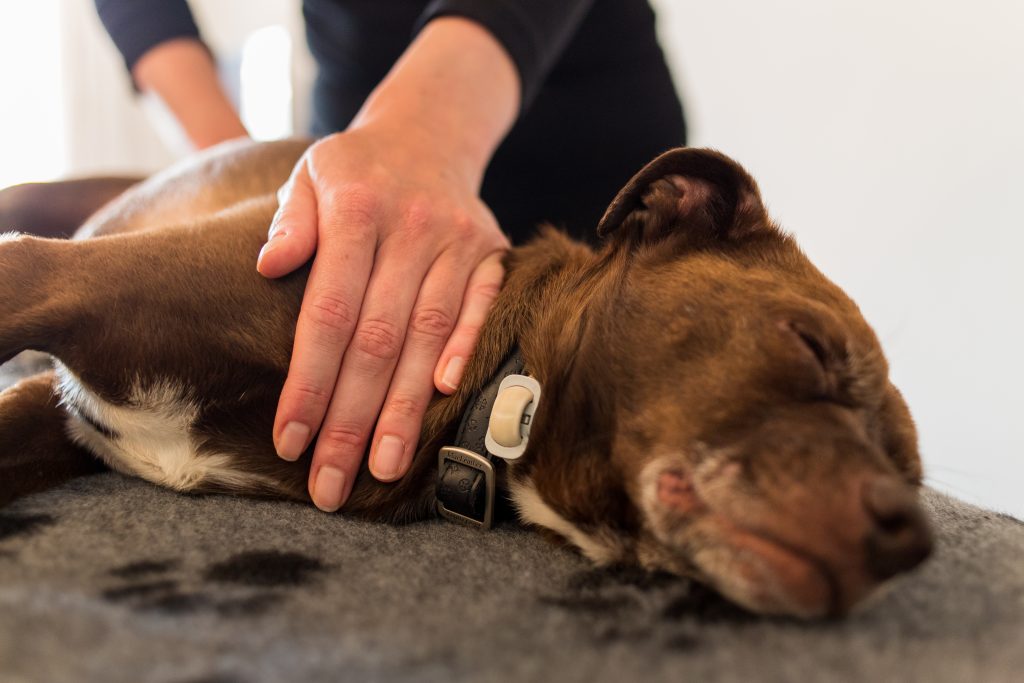
Every session begins with an assessment of your dog’s comfort, movement and muscular condition. During the first appointment, we’ll also discuss their medical history, lifestyle and any changes you’ve noticed.
I use a combination of Swedish, sports and deep tissue massage, alongside myofascial release and gentle passive movements. Each technique is selected according to your dog’s individual needs, with attention to both muscular tension and nervous system regulation.
Your dog is free to stand, sit, lie down or change position throughout the treatment. There’s no need to force them to stay still. I work at their pace, allowing time for them to become comfortable with the experience.
Ready to Help Your Dog Feel Better?
Whether your dog is experiencing muscular discomfort, slowing down with age or simply needs some extra care, I’d love to help. Get in touch to discuss your dog’s individual needs and arrange a session.